


Project Overview
Client: BDO Sydney Office Fitout
Location: 252 Pitt Street, Sydney CBD
Fire Engineer: Jensen Hughes
Product Supplied: FireMaster Concertina Fire Curtains
Location: 252 Pitt Street, Sydney CBD
Fire Engineer: Jensen Hughes
Product Supplied: FireMaster Concertina Fire Curtains
An Ambitious Vision Meets a Critical Constraint
In the heart of Sydney’s CBD, a new standard for high-rise commercial fitouts was taking shape. BDO Group Holdings had secured five levels 22 to 26 of the North Commercial Tower at 252 Pitt Street, a striking 37-storey addition to the Pitt Street Integrated Station Development. The brief was clear: create a connected, flowing workspace that linked teams and functions across five levels. The architectural response was bold. Internal stairs and generous voids would stitch together the upper three levels 24, 25 and 26 encouraging visual connection, movement, and a sense of openness that matched the firm’s forward-thinking culture. But what looks effortless in concept can be complex in code. According to the National Construction Code (NCC), connecting multiple storeys with unprotected vertical openings introduces serious fire risk. Flame and smoke can travel quickly up stair voids, compromising evacuation routes and spreading hazards across floors. Fire compartmentation is non-negotiable. But neither was the client’s design intent.The Problem: Fire Separation Without Walls
The standard compliance path under the NCC, full fire-rated walls between floors would have shut down the open-plan concept entirely. Solid barriers would break the visual connection. Fire doors and lobbies would interfere with flow. The client needed a solution that delivered the fire resistance of concrete but disappeared completely in daily use.
In short, they needed a fire barrier that wasn’t there, until it absolutely had to be.
This was a performance-based design challenge that couldn’t be solved with off-the-shelf products. It required a system that could meet rigorous fire standards, integrate with smoke control and alarm systems, and still respect the architectural vision.
How the System Works
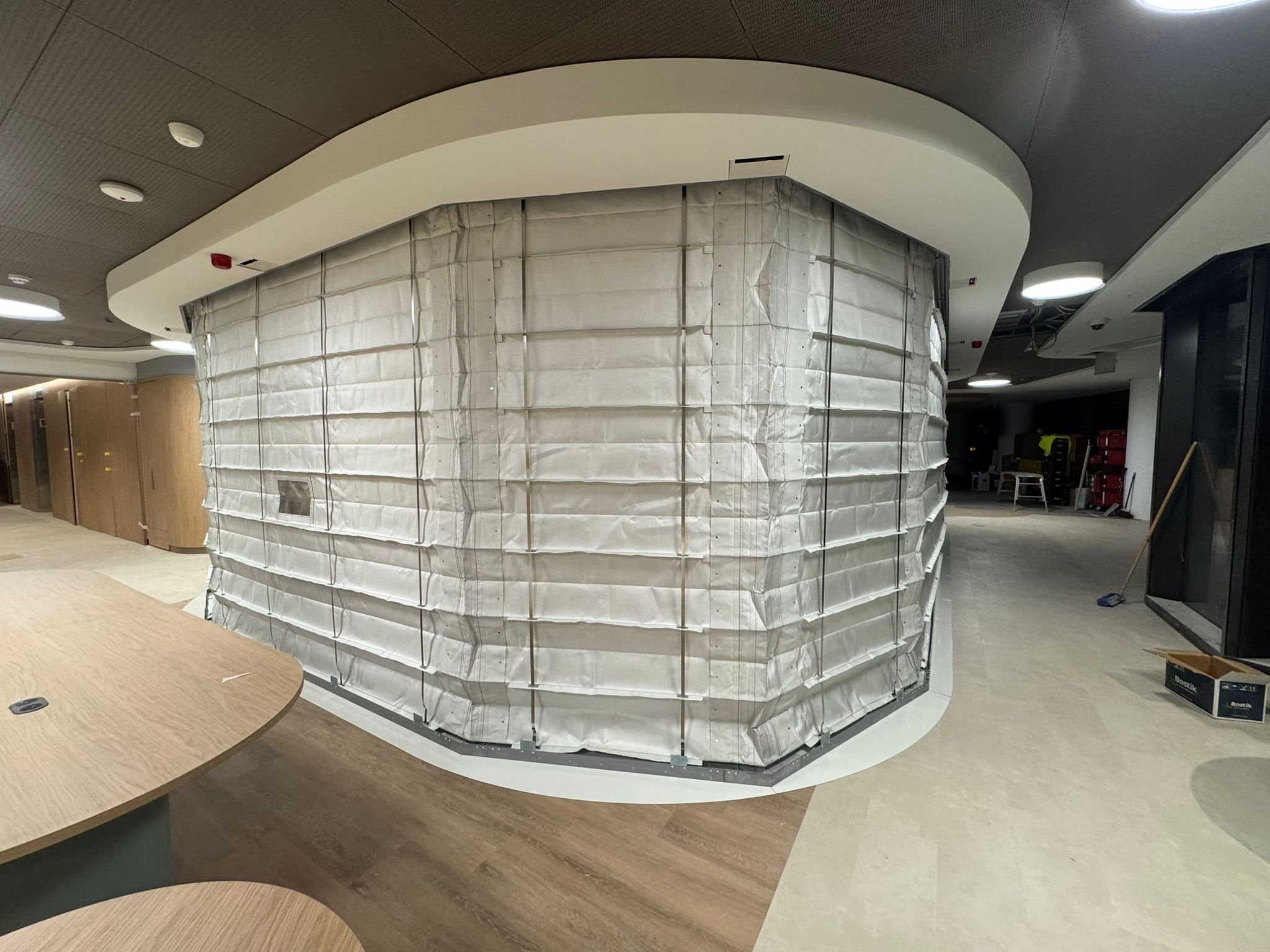
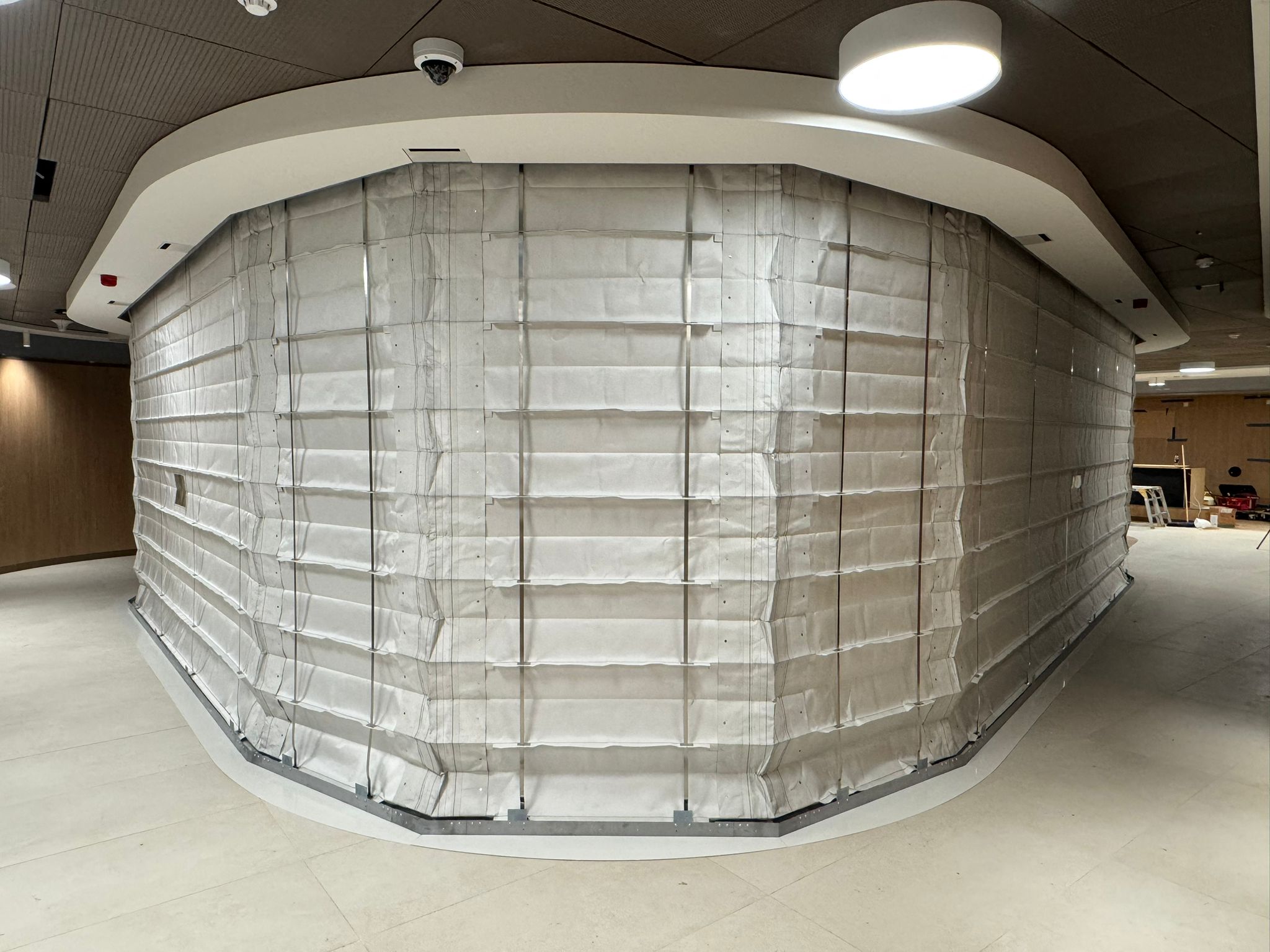
Each FireMaster Concertina curtain is housed invisibly within a custom-designed head box. There are no side tracks, no floor guides, and no vertical supports cluttering the architecture. The curtain remains fully retracted until activated by the building’s fire detection system.
The performance-based solution not only met the regulatory requirements but offered enhanced safety performance compared to standard DtS pathways, all while allowing the architectural and functional goals of the project to be fully realised.
In the event of an alarm, the system deactivates its electromagnetic brake. The curtain deploys under gravity, unfurling silently and smoothly until it seals the stair void -restoring the fire compartmentation required under the NCC.
Unlike traditional fire doors or roller curtains, the Concertina system is certified for 240 minutes of fire integrity, with no insulation rating required. This level of protection ensures safe evacuation time, protects property, and supports fire services intervention strategies.
The system integrates directly with the building’s zone pressurisation system and emergency warning and intercom system (EWIS).
Safety Through Sophisticated Design
Occupant awareness and responder access were also part of the solution. The system includes flashing red warning lights, high-decibel audible beacons, and bilingual signage at every curtain location. Curtain deployment zones are clearly marked on a reference plan in the Fire Control Room.
Each curtain includes onboard obstruction sensors. If an object is detected in the drop path, the system triggers a secondary audible alert and voice message, prompting clearance before full deployment.
Maintenance is just as important as initial performance. Every curtain is scheduled for manual deployment testing every three months, fail-safe power cut tests, and biannual servicing by certified technicians. The system has been tested to over 2,000 deployment cycles to ensure durability and reliability over its expected life span.
From Fitout to Fire Strategy
This wasn’t just a technical fix, it was an enabler. The fire curtain system unlocked a design outcome that otherwise wouldn’t have been possible under prescriptive code compliance. It transformed fire protection from a design constraint into an architectural asset.
It also formed a key part of the building’s formal fire safety strategy. The curtain locations, logic diagrams, and response plans are now embedded in the Fire Safety Schedule under the Environmental Planning and Assessment (Development Certification and Fire Safety) Regulation 2021.
During commissioning, each curtain system was subjected to a rigorous regime of on-site testing. This included response to smoke detection, sequencing with EWIS and pressurisation systems, alarm and signage checks, and full deployment under fail-safe conditions. Every result was logged and signed off by the certifier.
The Outcome: Open Space, Closed Risk
Today, the BDO tenancy at 252 Pitt Street functions exactly as the design team intended. Staff move freely between levels. Collaboration flows across open staircases. Light and air connect the upper floors. And hidden in the ceiling cavities are some of the most advanced fire protection systems ever deployed in an Australian commercial tower.
Greene Fire’s FireMaster Concertina curtains are silent, unseen, and ready. In the event of a fire, they will deploy within seconds to create a certified fire barrier across multiple levels, ensuring compliance, safety, and business continuity.
This is fire engineering at its most refined: invisible, intelligent, and entirely uncompromising.
Get In Touch
Sydney
Contact Our Sydney Office For: NSW, ACT, QLD, NZ, International
Melbourne
Contact Our Melbourne Office For: VIC, SA, TAS, WA, NT